
Villa Furniture Dismantling
in Dubai
Taken Apart Correctly, Every Component Accounted For
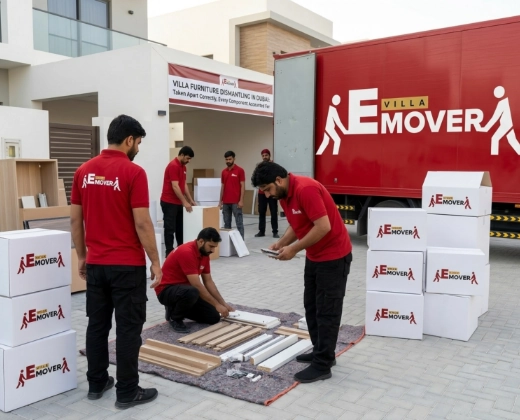
Why Does Villa Furniture Need Professional Dismantling in Dubai?
Standard villa doorframes measure 80–90cm wide. A floor-to-ceiling wardrobe measures 200–240cm tall and 60–120cm deep. A king-size platform bed base, fully assembled, cannot navigate the turn at the top of most villa stairwells. A custom entertainment wall built into an alcove has no exit route at all without coming apart section by section.
The problem is not that the furniture is large. The problem is that furniture assembled inside a room, in place, was never designed to exit that room intact. Every piece that needs to move through a doorway first needs to come apart in the correct sequence, with the correct tools, with every fixing accounted for. Getting the sequence wrong costs money. A wardrobe disassembled base-first collapses the frame and cracks the side panels. A cam lock stripped during disassembly cannot seat during reassembly — the hole needs re-drilling or the fitting needs replacing. A sectional sofa pulled horizontally off a hook-bracket connection bends the bracket permanently.
E Villa Mover has dismantled furniture across 5,000+
Dubai villa relocations
in over 10 years. The team arrives at each property knowing the disassembly sequence for every standard furniture type, the correct tool for every fixing, and the hardware management system that means nothing gets lost between the origin property and the destination.
What Does E Villa Mover's
Furniture Dismantling Service Include?
The dismantling service covers every stage from pre-move assessment through to component protection after disassembly — ready for transport, storage, or handover to the customer's own arrangement.
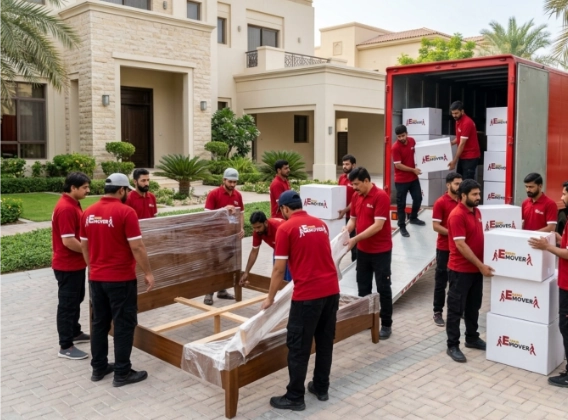
Complete Dismantling Service Workflow
The dismantling service covers every stage from pre-move assessment through to component protection after disassembly — ready for transport, storage, or handover to the customer's own arrangement.
- Pre-move furniture assessment: Crew leader walks through every room before dismantling begins, confirming which pieces require disassembly, correct sequence per piece, tool requirements, and specialist approach needs
- Disassembly in correct sequence: Every piece taken apart in order that prevents panel damage, joint stress, and fitting strip — sequence determined during assessment, not improvised on the day
- Hardware management: Every screw, bolt, cam lock, dowel, and fitting goes into labeled zip-lock bag assigned to its furniture piece — bags travel with their piece, not in shared container
- Component protection: Every dismantled panel, section, and structural component wrapped before it moves — no component travels unprotected against truck wall or another panel
- Photographs before complex pieces: Custom-built units, bespoke wardrobes, multi-configuration shelving systems photographed from multiple angles before first fixing removed — photographs serve as reassembly reference at destination
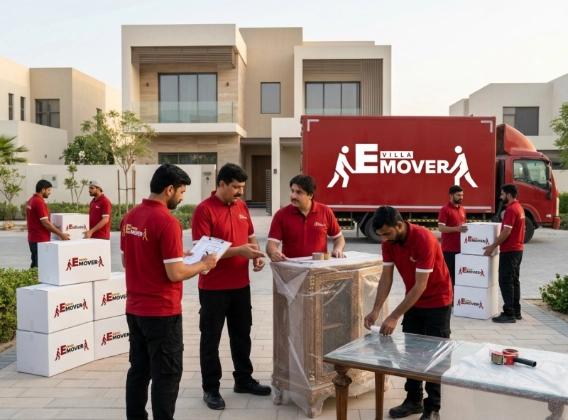
Pre-Dismantling Assessment Process
The assessment walk-through takes 15–20 minutes for a standard villa. It answers three questions per furniture piece before any tool is picked up.
- Does this piece require disassembly? Not every item must come apart. A three-seat fabric sofa navigates standard villa doorframe at specific tilt angle with two experienced crew members. A king-size platform bed does not — assembled base width and headboard height together exceed what any standard doorframe allows at tilt.
- What is the correct disassembly sequence? Sequence matters more than most people realise. A floor-to-ceiling wardrobe disassembled in wrong order — base removed before side panels are free — loses structural stability mid-process and frame drops. A storage bed with gas-strut ottoman requires pressure relieved before slat deck removed.
- What tools are required? Standard Dubai villa furniture uses metric Allen keys, Phillips screwdrivers, adjustable wrenches. IKEA furniture uses cam locks requiring flathead screwdriver in specific rotation direction — not Allen key. Custom carpenter-built units use lag bolts, masonry anchors, sometimes non-standard bit sizes.
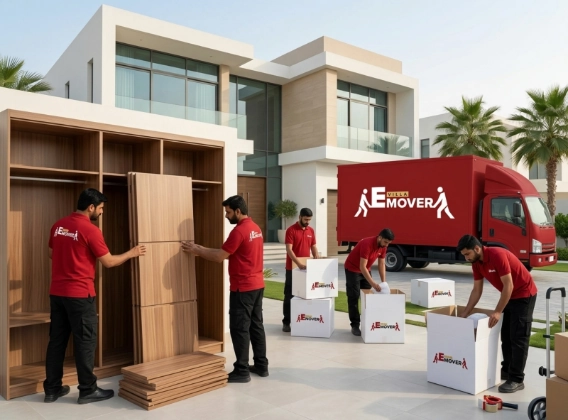
Floor-to-Ceiling Wardrobe Dismantling
The most common and most complex dismantling job in a Dubai villa. The sequence is non-negotiable — every step must precede the next or structural failure occurs during disassembly.
- 1. Empty all internal contents: Shelves, hanging rails, drawer units before touching external structure. A loaded wardrobe panel weighs significantly more than empty one and cannot be safely handled by single crew member.
- 2. Remove glass panels and mirror inserts first: Glass panels flex and crack if frame moves while still seated. Each glass panel removed before any structural disassembly begins — wrapped in moving blankets with foam edge guards, set aside against padded wall.
- 3. Remove internal fixed shelves: Shelf pins extracted and bagged per shelf position — not pooled. A shelf returned to wrong position creates gap in interior layout that customers notice immediately at destination.
- 4. Detach the top rail: Top rail connects both side panels at ceiling contact point. It is last structural element to go on during assembly and first to come off during disassembly. Typically 2–4 bolts per side depending on manufacturer.
- 5. Release side panel cam locks at base connection: On MDF wardrobes, side panels attach to base using cam locks at bottom edge. These release counterclockwise with flathead screwdriver. Forcing them with Allen key or turning clockwise strips cam lock housing.
- 6. Separate side panels from base: With top rail and base cam locks released, side panels lift clear of base. Each panel labeled left and right — they are not interchangeable on wardrobes with offset hinge positions.
- 7. Remove the base last: Base is heaviest single component on most wardrobes — provides structural anchor throughout disassembly. It comes off last precisely because it keeps everything stable until all other components are clear.
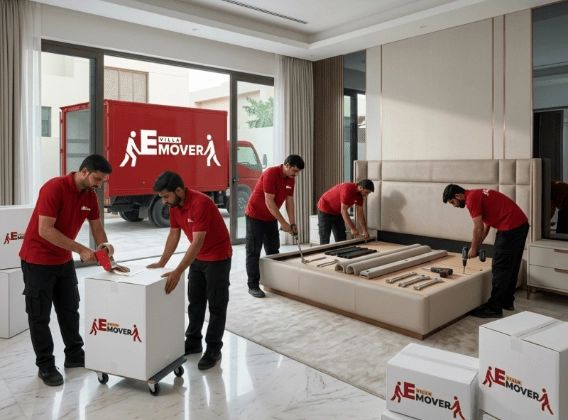
King, Super King, Platform & Storage Bed Dismantling
King-size and super-king platform bed sequence follows specific order to prevent damage to frame, headboard, and support mechanisms during disassembly.
- 1. Remove bedding and mattress: Placed in mattress bag before moving to protect during transport.
- 2. Remove under-bed storage drawers: Emptied first, then slid out and stacked separately for protection.
- 3. Locate headboard bolt positions: Typically on interior face of headboard where it meets side rails. Allen key bolts on most manufactured frames. Removed with headboard still standing — one crew member supports headboard while other removes bolts.
- 4. Detach headboard from side rails: Headboard lifts clear of rail connectors once bolts removed. Wrapped in cotton furniture blanket (for upholstered headboards) or moving blanket (for wooden/metal) immediately after removal.
- 5. Disconnect side rails from foot section: Most platform beds use hook-and-rail connection between side rail and foot section, plus bolt lock. Bolt unlocks first, then rail lifts off hook. Side rails labeled left and right — hook positions are mirrored.
- 6. Remove centre support legs or slat support bars: Unbolted and bagged with component they belong to.
- 7. Remove slats: Bundled in groups of 5–6 with stretch wrap. Labeled with bed they came from. Slats are not universally interchangeable; some beds use slats of varying width across frame, repositioning them changes support profile.
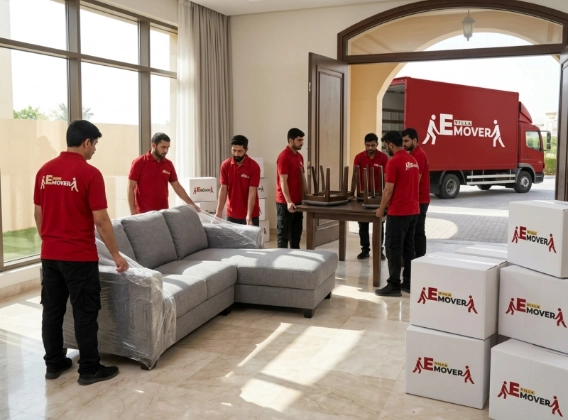
Sectional Sofas & Dining Tables
The dismantling challenge with sectional sofas is that attachment method between sections is not visible from exterior and varies significantly by brand and product line. Dining tables require specific handling based on material and construction type.
- Hook-and-bracket (most common): Metal hook on chaise frame drops into bracket channel on main frame. Release: lift chaise section vertically off bracket — do not pull horizontally. Horizontal force bends bracket permanently and connection can never seat correctly again.
- Bolt connection: Found on heavier designer sectionals and some custom pieces. Visible bolt heads at interior frame connection point. Removed with socket wrench or Allen key depending on bolt type. Bolt hardware bagged per connection point.
- Clip connection: Found on some mid-range manufactured sectionals. Plastic or metal clip on base rail releases by pressing tab. Lower risk of damage than hook-and-bracket but requires identifying tab position before applying lift force.
- Standard solid wood table: Extension leaves removed and wrapped individually, labeled with table they belong to. Legs located at underside fixing points — typically 4 bolts per leg through base bracket. Each leg's bolt set bagged and labeled per leg position.
- Glass-top dining table: Glass top is first component addressed — before base is touched. Glass sits either in recessed channel or on rubber pads. Lifts vertically clear of mounting position and wrapped immediately in moving blankets with foam edge padding. Glass tops travel vertically — never flat — in padded crate or secured against padded truck wall.
- Extendable butterfly-leaf tables: Leaf mechanism confirmed fully retracted and locked before any disassembly begins. A partially open leaf creates structural weak point at extension slides — transport in this condition damages mechanism.
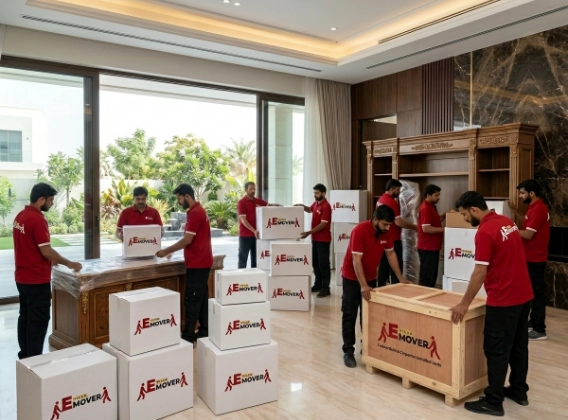
Custom-Built & Carpenter-Installed Units
Custom-built furniture — entertainment walls built into alcoves, fitted wardrobes with wall-to-wall installation, home bar units, study units installed by contractor — presents highest-risk dismantling scenario in villa move.
- No instruction manual: Fixing method reflects specific carpenter's preferences, wall type, materials available at time of installation. Some units use standard bolt fixings that come apart cleanly. Others use structural adhesive, expanding anchors in masonry, fixings whose removal damages wall surface or panel face.
- Pre-move survey photographs unit: Photographed from all visible angles and supervisor locates every external fixing before committing to approach. Assessment determines whether unit can be disassembled and reassembled in usable state.
- Customer confirmation required: If construction method creates damage risk — panels glued, fixings concealed behind applied facings, unit structurally integrated with wall — this communicated to customer before any work begins. No custom unit touched without explicit customer confirmation of approach.
- For units that disassemble cleanly: Wall anchors extracted using correct drill bit and driver for anchor type. Sections removed in order that maintains structural stability — free-floating sections first, load-bearing anchored sections last. Every fixing bags with its section. Photographs guide reassembly.
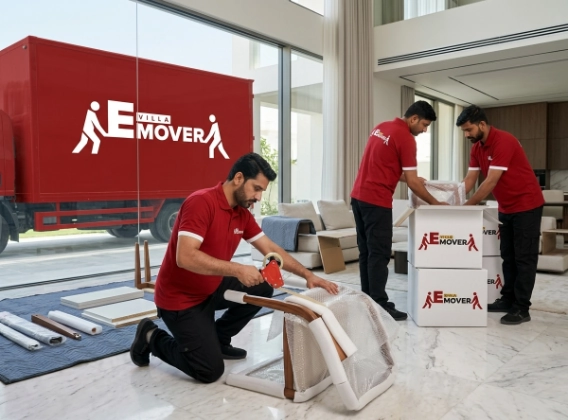
Component Protection After Dismantling
A correctly dismantled piece can still arrive damaged if components are not protected after disassembly. Panel-to-panel contact in moving truck causes surface marks, scratches, corner chips on every trip. Glass panels stacked flat crack. MDF panels without surface protection develop pressure marks from strapping.
| Component Type | Protection Method |
|---|---|
| MDF wardrobe panels | Moving blanket — each panel individually wrapped, no direct panel contact |
| Glass wardrobe panels / mirror inserts | Foam edge padding → moving blanket → vertical transport against padded wall |
| Wooden bed frame components | Moving blanket wrap — headboard, rails, base sections individually |
| Upholstered headboard | Cotton furniture blanket — no plastic wrap, no tape on upholstered surface |
| Metal bed frame rails | Stretch wrap — prevents rail-to-rail scratching in transport |
| Dining table legs | Individual moving blanket wrap — leg bolt bags taped to their leg |
| Dining tabletop | Soft cloth layer first → moving blanket outer → transported flat with nothing stacked on top |
| Glass tabletop | Foam edge padding → moving blanket → vertical crated transport |
| Sofa sections | Cotton blanket (leather) or stretch wrap (fabric) → cushions bagged separately |
| Shelving unit sections | Moving blankets — sections bundled in groups with blankets between each |
| Hardware bags | Taped to component they belong to — not placed in separate carton |
When Is Standalone Dismantling Needed?
Several situations require dismantling without complete villa relocation. The service is available as part of complete villa move — included as standard in all villa moving quotes — or as standalone dismantling-only booking.
- Pre-renovation preparation: Villa undergoing full renovation requires furniture cleared from specific rooms — often to storage — before contractors begin. Wardrobes, beds, large units need dismantling to move through doorways and into storage.
- Staging villa for sale or handover: Properties being prepared for sale photography or tenant handover sometimes require specific furniture removed. Single wardrobe that blocks bedroom's proportions. Large sectional that makes living room look smaller than it is.
- Furniture going into storage separately: Customers store furniture during gap between tenancies, during period abroad, or during renovation — book dismantling as standalone service before storage company or own arrangement collects pieces.
- Newly purchased furniture that doesn't fit through doorway: Customer who bought king-size bed frame or large wardrobe discovered on delivery day it cannot navigate stairwell assembled. Dismantling service visits property — or delivery location — dismantles piece, moves to correct room, leaves ready for reassembly.
- Flat-pack furniture needing dismantling for relocation: IKEA and flat-pack furniture assembled in villa now being moved to different property. Assembly service originally put it together but still needs to come apart correctly to move.

Furniture Types & Brands Handled in Dubai
E Villa Movers dismantles wide range of furniture types and brands across Dubai villas — from flat-pack modular systems to custom carpenter-built installations.
- Flat-pack & modular brands: IKEA all product ranges including PAX, HEMNES, MALM, KURA, MYDAL, KALLAX, BILLY, BRIMNES, NORDLI, SONGESAND | Home Centre | Pan Emirates | Danube Home | JYSK | West Elm modular | Pottery Barn sectional | Amazon and Noon delivered flat-pack
- Custom & carpenter-built: Fitted wardrobes | Built-in entertainment walls | Bespoke study and home office units | Home bar units | Alcove shelving | Custom bedroom sets built to room dimensions
- Standard manufactured furniture: All villa bedroom sets | Dining table and chair sets (all materials) | Sectional and modular sofas | Coffee tables with glass inserts | TV units and media consoles | Children's bunk beds and loft beds
- Storage beds: Ottoman or drawer bases with specific dismantling protocols for gas-strut mechanisms
- Modular shelving systems: IKEA KALLAX, BILLY, HEMNES, Expedit units. Home Centre shelving. Custom modular systems with wall-anchored or freestanding configurations
- Specialist heavy items: Upright pianos (specialist piano board required, minimum 4-crew) | Home gym multi-station units | Treadmills with folding deck mechanism | Safe units (weight assessed before crew size confirmed)

Cost of Furniture Dismantling in Dubai
Dismantling costs reflect crew time and complexity of specific piece. Standard flat-pack furniture (IKEA, Home Centre) dismantles faster than custom carpenter-built units. Price structure is per piece, confirmed after assessment or WhatsApp photo review.
| Furniture Type | Estimated Cost (Dismantling Only) |
|---|---|
| Standard 2-door wardrobe | AED 80 – AED 150 |
| Floor-to-ceiling 3-door wardrobe | AED 130 – AED 220 |
| IKEA PAX wardrobe (per double unit) | AED 80 – AED 160 |
| King/super-king platform bed | AED 100 – AED 180 |
| Storage bed with ottoman base | AED 150 – AED 250 |
| Standard bed frame (double/queen) | AED 80 – AED 130 |
| Sectional sofa (chaise separation) | AED 80 – AED 140 |
| Dining table (legs only) | AED 60 – AED 100 |
| Glass-top dining table | AED 120 – AED 180 |
| Modular shelving unit (per section) | AED 50 – AED 100 |
| Custom-built unit | Assessed after survey — varies by size and construction |
Note: All figures indicative for dismantling only without transport. Reassembly priced separately or included in full villa move quote. When dismantling part of complete villa move booking, no per-piece charges apply — included in villa move fixed price. Hourly rate for complex/custom units: AED 100–130 per crew member per hour, minimum 1 hour.